
From Doomscrolling to Joy How to Build a Happier Online Habit

A phone can feel harmless at 10:45 p.m. Then it is 12:30 a.m., your chest is tight, your brain is replaying world events, and sleep has moved to another ZIP code.
That is the basic rhythm of doomscrolling. One more headline. One more clip. One more angry comment thread. The mind says, “I should know what is happening.” The body says, “Why are we preparing for disaster in bed?”
In private conversations, younger male clients often admit this pattern with a mix of embarrassment and relief. They are not usually scrolling because they enjoy feeling anxious. Many describe it as automatic. They open an app for a quick check, get pulled into bad news, conflict, or comparison, and then spend the night wired, restless, and irritated.
The good news is that online life does not have to be a machine that turns attention into dread. It can also be playful, funny, comforting, and genuinely restorative. Yes, sometimes that means watching a cat fall asleep in a cardboard box.
And no, that is not shallow. Sometimes it is exactly the kind of tiny joy the nervous system needs.

Doomscrolling is not just reading the news
Doomscrolling is the habit of continuously consuming distressing content, especially when it starts to feel compulsive. It can include news, war footage, political arguments, crime clips, disaster updates, outrage posts, or comment sections where everyone seems one sentence away from combustion.
The content itself is not always the problem. Staying informed matters. Caring about the world matters. The issue is the loop.
A typical loop looks like this:
You feel uncertain or uneasy.
You check your phone to get information.
The information makes you feel worse.
Feeling worse makes you search for more certainty.
More scrolling brings more alarm.
Your body stays activated long after the phone goes down.
This is why doomscrolling often shows up at night. Bedtime removes distractions. The room gets quiet. The day’s stress catches up. A phone offers quick stimulation and a sense of control. Then the algorithm notices what holds your attention and serves more of it.
For many younger men, there can be another layer. Some feel pressure to appear calm, informed, rational, and tough. They may not talk openly about fear or sadness during the day. At night, the feeling leaks out through compulsive checking. Instead of saying, “I feel unsettled,” the thumb keeps moving.
That does not mean this is only a male issue. Anyone can doomscroll. Still, when younger male clients talk about anxiety and sleepless nights, late-night phone use often appears somewhere in the story.
Why bad news grabs the brain so quickly
Humans do seem to have a natural pull toward negative information. Psychologists often talk about “negativity bias,” which means the brain tends to notice threats quickly and remember them strongly.
That makes sense if you think in survival terms. Missing a pleasant sunset is unfortunate. Missing a predator in the bushes is deadly. A brain that reacted fast to danger helped our ancestors survive.
So yes, part of this pattern is natural. We are built to scan for risk.
But doomscrolling is not just ancient biology. It is also learned and reinforced.
Apps are designed around attention. Content that provokes fear, anger, shock, or disgust often keeps people watching longer. The more a person pauses on a dramatic post, the more similar content may appear. Over time, the feed can start to feel like proof that the whole world is becoming worse by the minute.
Personal history matters too. If someone grew up in a tense home, experienced bullying, lived through trauma, or learned to stay alert to avoid conflict, their nervous system may already be trained to watch for danger. Online content can pour fuel on that habit.
So the answer is both. We have a built-in tendency to notice threats, and our digital habits can train that tendency until it becomes overactive.
The important part is this: a habit that was learned can be reshaped.

Cat videos are not a waste of time
There is a reason cat videos, dog reunions, baby goats in pajamas, and wholesome cooking clips are everywhere. They offer something many people are not getting enough of: harmless delight.
Uplifting content can give the mind a break from threat scanning. A silly animal video is simple. It does not ask you to solve a crisis. It does not demand a position. It does not present a villain. It just invites a smile.
That matters.
When people watch something gentle, funny, or sweet, they often breathe differently. Their shoulders loosen. Their facial muscles change. Their body receives a signal that says, “Right now, we are safe enough to enjoy something.”
Will a cat video cure anxiety? No. It should not replace therapy, medical care, sleep hygiene, movement, connection, or real-world support. This article is informational and not a substitute for professional mental health care.
But joyful content can still be useful. Think of it as emotional nutrition. If every mental “meal” is outrage, crisis, and comparison, it makes sense to feel sick. Adding moments of humor, beauty, curiosity, and tenderness gives the mind more range.
This is not about pretending the world is perfect. It is about refusing to let the worst parts of the internet become the only parts of reality you let in.
The feed you have is not the feed you have to keep
A lot of people talk about “the algorithm” as if it were a weather system. It is powerful, but it is not magic. It responds to signals.
When you watch a video to the end, pause on an argument, open the comments, share an angry post, or search the same topic repeatedly, you teach the feed what to bring back. That does not mean you caused the content. It means your behavior helps shape what arrives next.
The useful question is not, “Why is my feed so terrible?”
A better question is, “What have I accidentally trained my feed to believe I want?”
Maybe your apps think you want:
Conflict
Crisis
Political rage
Fitness comparison
Dating complaints
Crime footage
Humiliation clips
Disaster updates
If that list feels familiar, do not treat it as a character flaw. Treat it as a pattern. Patterns can change.
Curating a healthier feed is not about becoming fragile or uninformed. It is about building a digital environment that does not keep your nervous system on high alert all day.
Start with one honest audit
Before changing anything, spend a day noticing what your online life actually feels like.
Not what you think you should feel. Not what you would tell someone else. What you actually feel.
After a scrolling session, ask:
Do I feel calmer or more tense?
Do I feel informed or overwhelmed?
Do I feel connected or lonely?
Do I feel motivated or ashamed?
Do I want to sleep, or do I want to keep checking?
This is where many people have a small moment of clarity. They realize certain accounts always leave them agitated. Some comment sections always steal 20 minutes. Some creators dress up panic as “truth.” Some feeds turn self-improvement into self-disgust.
You do not need to defend your attention to anyone. If a page consistently makes your day worse, that is enough information.
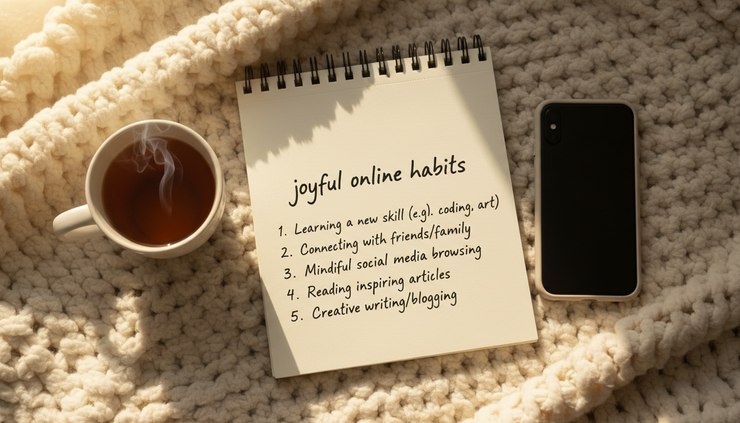
Build a positive online experience on purpose
A happier online habit rarely happens by accident. It takes some pruning and replanting. The good news is that small changes work better than dramatic rules you abandon by Thursday.
Try these steps.
Unfollow accounts that leave a bad aftertaste
Some content is not obviously harmful in the moment. It may be funny, dramatic, or fascinating. The test is how it leaves you feeling.
If an account regularly makes you feel angry, inferior, suspicious, numb, or hopeless, unfollow it. If unfollowing feels too strong, mute it first.
You are allowed to leave quietly.
Train the algorithm with boring consistency
Use the tools the apps give you. Tap “not interested.” Hide posts. Skip videos you do not want more of. Do not open the comments on rage bait. Do not watch the full clip just to see how bad it gets.
Then do the opposite with content you want more of. Search for topics that make you feel lighter or more alive.
Try:
Animal rescue updates
Stand-up clips that do not rely on cruelty
Nature walks
Woodworking, painting, baking, or gardening
Gentle fitness creators
Music lessons
Local history
Space photography
Funny pets
People being kind in ordinary ways
The feed may not change overnight, but it will learn.
Create a bedtime boundary that is actually realistic
“Never use your phone at night” sounds great until real life happens. A more realistic goal is to change what the phone is allowed to do near bedtime.
Set a night routine like this:
No news after a chosen time
No comment sections in bed
No videos about crime, conflict, or politics at night
Phone charges across the room if sleep has been rough
A short playlist of calming or funny content saved in advance
The saved-in-advance part matters. At 11:30 p.m., your tired brain should not have to make wise choices in a casino of infinite content.
Give yourself a joy quota
This may sound silly, but it works surprisingly well. Decide that each day, your online time must include at least a few minutes of content that exists only to make life feel better.
Not productive. Not educational. Not morally urgent.
Just joyful.
Watch the cat video. Save the raccoon washing grapes. Follow the guy who restores old tools. Watch someone make soup in a quiet kitchen. Enjoy the golden retriever who carries his own leash.
Joy is not a reward you earn after absorbing enough misery. It is part of staying human.
Replace scrolling with a closing ritual
The hardest part of doomscrolling is stopping. A closing ritual gives the brain a clear finish line.
It could be:
Sending one kind text
Watching one calming video
Reading one page of a book
Playing one relaxing song
Writing down three things that did not go wrong today
Putting the phone on charge and saying, “That is enough for tonight”
Yes, saying it out loud may feel strange. Try it anyway. The brain likes cues.
Staying informed without drowning
Some people worry that choosing joyful content means ignoring reality. That fear is understandable. There is a lot happening in the world, and tuning out completely can feel irresponsible.
The goal is not ignorance. The goal is proportion.
A healthier information habit might include checking reliable news once or twice a day, rather than grazing on alarming posts for hours. It might mean reading an article instead of watching graphic clips. It might mean choosing one issue to support through action, donation, volunteering, or conversation, rather than consuming endless updates that lead nowhere.
There is a difference between being informed and being emotionally flooded.
Being informed helps you understand and act. Being flooded leaves you frozen, irritable, and awake at 2:00 a.m.
A more balanced online life makes room for serious things and soft things. News and jokes. Grief and beauty. Concern and rest.
That balance is not denial. It is maintenance.

Choose what gets to live in your head
The internet is not one thing. It is a disaster feed, a joke book, a library, a support group, a gallery, a shouting match, a cooking class, and a room full of cats knocking cups off tables.
The question is which parts you visit most often.
If doomscrolling has become your default, start small. Unfollow one account. Save one joyful video. Set one nighttime rule. Search one topic that makes you smile. Let your feed learn that you are not only interested in fear.
The world will still be complicated tomorrow. You can care about it better after sleep. You can face hard things with more steadiness when your mind has also been fed beauty, humor, and warmth.
So tonight, before the scroll turns dark, make a different choice. Find the cat in the cardboard box. Watch the dog greet its person at the airport. Listen to the song that makes your shoulders drop.
Your attention is a home. Be careful what you invite to stay.


Comments